

L'evoluzione (?) della specie
11 Animal Wonders of Evolution | Wired Science | Wired.com.
The evolution of life has not been an orderly affair. Every time a biological age is swept aside, a few creatures remain. Millions of years later, many are still with us.
Sometimes these animals are called “living fossils,” but it’s not a good term. After all, their lineages haven’t survived ice ages and warm spells and every natural upheaval just to be visualized in amber by some upstart hairless ape. A better term is “evolutionarily distinct.” They’re simply, impressively unique.
“Evolutionarily distinct creatures contain more genetic diversity. They look different. They tend to be behaviorally different. These are species that are different from everything else on the planet,” said Jonathan Baillie, conservation program director at EDGE of Existence.
EDGE stands for Evolutionarily Distinct and Globally Endangered, which are the criteria of the animals it tries to protect. They’re not just singularly unique, but desperately imperiled and often unappreciated: Pangolins and purple frogs and Laotian rock rats don’t have the charisma of traditional conservation favorites, yet in some ways they’re more important. To use an art world analogy, losing an EDGE species isn’t like losing a Renoir or Monet, but the entirety of French Impressionism.
“We’ve grown up with rhinos and tigers and lions on TV. Our generation is quite familiar with those. It’s now possible expand conservation beyond that,” said Baillie. “By conserving EDGE creatures, you save a disproportionate amount of genetic, ecological and behavioral diversity.”
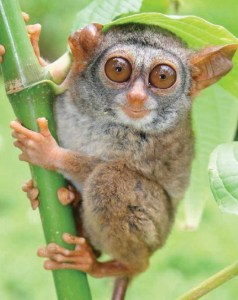
On the following pages, Wired.com takes a tour of our favorite EDGE animals.


 La giusta distanza